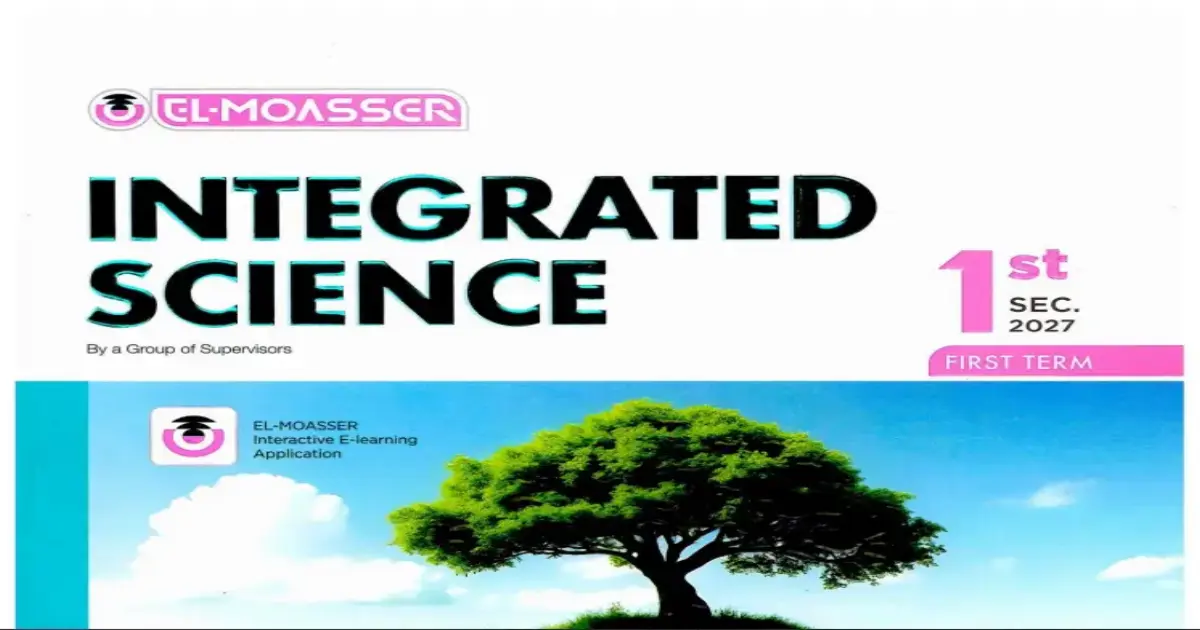
كتاب المعاصر علوم متكاملة للصف الأول الثانوي لغات ترم أول 2027 pdf
أصدرت سلسلة كتب المعاصر لطلاب المرحلة الثانوية لغات كتاب المعاصر علوم متكاملة للصف الأول الثانوي لغات ترم أول 2027 pdf، لتوفير محتوى تدريبي وشرح يساعد الطلاب على متابعة موضوعات المنهج والاستعداد للدروس والتقييمات، باعتباره من الكتب الخارجية التي يعتمد عليها الطلاب في المراجعة والتدريب، بينما يتيح موقع «شبابيك» رابط التحميل المباشر للكتاب للوصول إلى الدروس والوحدات المقررة إلكترونيًا.
كتاب المعاصر علوم متكاملة أولى ثانوي لغات ترم أول 2027
يستطيع الطلاب التعرف على طبيعة المنهج الدراسي ومحتويات وطريقة تنظيم وعرض كتاب المعاصر علوم متكاملة للصف الأول الثانوي لغات ترم أول 2027 من خلال مجموعة من النقاط التي توضح أبرز ما يتضمنه الكتاب، وطريقة تقديم الدروس والتدريبات المرتبطة بالمقرر الدراسي.
-
الوحدة الأولى: الأنظمة البيئية المائية (Aquatic Ecosystems)
-
الأهداف العامة للوحدة: تهدف إلى فهم الغلاف المائي على كوكب الأرض، واستكشاف الخصائص الفيزيائية والكيميائية للماء والمحاليل المائية، ودراسة الأهمية الحيوية للماء والتكيفات البيولوجية للكائنات الحية في البيئات المائية، بالإضافة إلى تحليل أثر العوامل البيئية (الغازات، الضوء، الإشعاع الشمسي، والضغط) على الحياة المائية، ودور الإنسان في حفظ التوازن البيئي واستدامة الحياة.
-
اهداف الدروس المكونة للوحدة:
-
الغلاف المائي على كوكب الأرض («Hydrosphere on Planet Earth»).
-
الخصائص الكيميائية للماء («Chemical Properties of Water»).
-
الخصائص الفيزيائية للماء («Physical Properties of Water»).
-
المحاليل المائية وخصائصها («Aqueous Solutions and their Properties»).
-
الأهمية البيولوجية للماء («Biological Importance of Water»).
-
التكيفات البيولوجية للكائنات الحية في البيئات المائية («Biological Adaptations of Living Organisms in the Aquatic Environments»).
-
تأثير غازات الهواء الجوي على البيئات المائية («Effect of Atmospheric Air Gases on Aquatic Environments»).
-
تأثير الضوء والإشعاع الشمسي على البيئات المائية («Effect of Light and Solar Radiation on Aquatic Environments»).
-
تأثير ضغط الماء على الكائنات الحية («Effect of Water Pressure on Organisms»).
-
التوازن البيئي ودور الإنسان في استدامة الحياة المائية («Ecological Balance and the Role of Humans in the Sustainability of Aquatic Life»).
-
-
-
الوحدة الثانية: الغلاف الجوي (The Atmosphere)
-
الأهداف العامة للوحدة: تهدف إلى التعرف على مكونات وطبقات الغلاف الجوي للأرض، واستيعاب التفاعلات الكيميائية والعوامل الفيزيائية المؤثرة فيه، بالإضافة إلى إبراز دور العلوم والتطبيق العلمي في استدامة الغلاف الجوي وحمايته.
-
اهداف الدروس المكونة للوحدة:
-
مكونات وطبقات الغلاف الجوي («Components and Layers of the Atmosphere»).
-
التفاعلات الكيميائية في الغلاف الجوي («Chemical Reactions in the Atmosphere»).
-
العوامل الفيزيائية وتأثيرها على الغلاف الجوي («Physical Factors and their Effect on the Atmosphere»).
-
الغلاف الجوي ودور العلم في استدامته («The Atmosphere and the Role of Science in its Sustainability»).
-
-
كما يوضح الكتاب شكل التدريبات والأنشطة التي يمكن للطلاب الاستفادة منها أثناء دراسة المنهج، إلى جانب الأسئلة التي تساعد على قياس مدى استيعابهم للمعلومات والمفاهيم الواردة في الوحدات الدراسية.
يستعرض موقع «شبابيك» كذلك أنواع الأسئلة والتدريبات الموجودة في كتاب المعاصر علوم متكاملة أولى ثانوي لغات ترم أول 2027، والتي تتنوع بما يتناسب مع طبيعة المحتوى الدراسي، وتشمل أنماطًا مختلفة من الأسئلة التي يمكن للطالب التدريب عليها خلال فترة الدراسة.
ويمكن الإشارة إلى مجموعة من الأسئلة والتدريبات التي يضمها كتاب المعاصر علوم متكاملة للصف الأول الثانوي لغات ترم أول 2027، والتي تساعد الطلاب على تطبيق ما جرى دراسته والتدرب على طريقة الإجابة عن الأسئلة المرتبطة بالمنهج.
-
Statement: Everything surrounds us including biotic components and abiotic components.
-
Answer: Environment.
-
-
Statement: A community of living organisms interacting with each other and with the other abiotic components.
-
Answer: Ecosystem.
-
-
Statement: It is a nearly closed system that is able to change the Earth's surface physically, chemically and biologically through a continuous change among the three states of water.
-
Answer: Water cycle in nature.
-
-
Statement: It is a process by which the plant gets rid of excess water in the form of vapor from its surface exposed to the air.
-
Answer: Transpiration.
-
-
Statement: Microscopic openings found on the surfaces of leaves and green stems, through which most transpiration occurs.
-
Answer: Stomata.
-
-
Statement: A process by which living organisms get rid of the waste products resulting from the metabolic processes.
-
Answer: Excretion.
-
Give Reasons For
-
Question: The living organisms interact with each other and with the non-living components in the ecosystem.
-
Answer: To maintain the ecological balance and ensure survival through the flow of energy and cycling of nutrients within the ecosystem.
-
-
Question: Ocean water is not suitable for direct use.
-
Answer: Because it contains a high percentage of dissolved salts.
-
-
Question: Condensation has an important role in the water cycle in nature.
-
Answer: Because it converts water vapor into clouds, leading to precipitation (rain or snow) that returns water back to the Earth's surface.
-
-
Question: Stomata have a role in adaptation of plant with the high atmospheric temperature.
-
Answer: Because transpiration through stomata cools down the plant temperature as water evaporates.
-
What Happens In Each Of The Following Cases
-
Question: Water infiltration through the soil pores and sedimentary rocks.
-
Answer: Groundwater is formed and stored underground.
-
-
Question: Plants perform the transpiration process, «regarding: the transportation process in plant».
-
Answer: It generates a pulling force (transpiration pull) that helps in absorbing and transporting water and mineral salts upward from roots to leaves through xylem vessels.
-
Compare Between Each Of The Following
-
Question: The biotic components and the abiotic components in the environment «in terms of: examples».
-
Answer:
-
Biotic components: Living organisms such as plants, animals, and microorganisms.
-
Abiotic components: Non-living factors such as water, air, soil, light, and temperature.
-
-
-
Question: Salt water and frozen water «in terms of: their percentage from the total water percentage on Earth».
-
Answer:
-
Salt water: Represents about 96.5% of the total water on Earth.
-
Frozen water: Represents about 68.7% of fresh water (approximately 1.7%–2% of the total water on Earth).
-
-
Explanatory Questions
-
Question: Explain how clouds are formed and the importance of this process in water cycle.
-
Answer: Clouds are formed when warm water vapor rises into the higher atmospheric layers, cools down, and condenses into water droplets around microscopic particles. This process is essential for returning water to the Earth's surface through precipitation.
-
-
Question: The importance of transpiration is not limited on plant only. Explain this.
-
Answer: Transpiration releases significant amounts of water vapor into the atmosphere, contributing to cloud formation, maintaining humidity, cooling the surrounding atmosphere, and continuing the water cycle.
-
Questions That Measure High Levels Of Thinking
-
Question: The opposite figure illustrates some processes in the water cycle in nature: Which of the following processes directly precedes the condensation process?
-
Options:
-
(a) (1)
-
(b) (2)
-
(c) (3)
-
(d) (4)
-
-
Correct Choice Symbol: (a)
-
Correct Answer: (a) (1)
-
-
Question: The opposite figure illustrates some processes in the water cycle in nature: Which of the following processes doesn't occur by the effect of gravity?
-
Options:
-
(a) (1)
-
(b) (2)
-
(c) (3)
-
(d) (4)
-
-
Correct Choice Symbol: (a)
-
Correct Answer: (a) (1)
-
تحميل كتاب المعاصر علوم متكاملة للصف الأول الثانوي لغات ترم أول 2027 pdf
يمكن للطلاب الحصول على النسخة الإلكترونية من كتاب المعاصر علوم متكاملة للصف الأول الثانوي لغات ترم أول 2027 pdf من خلال رابط التحميل المباشرمن تليجرام [من هنا]، للاستفادة من محتوى الكتاب ومراجعته إلكترونيًا طوال الفصل الدراسي الأول.